 Accucraft UK Ltd
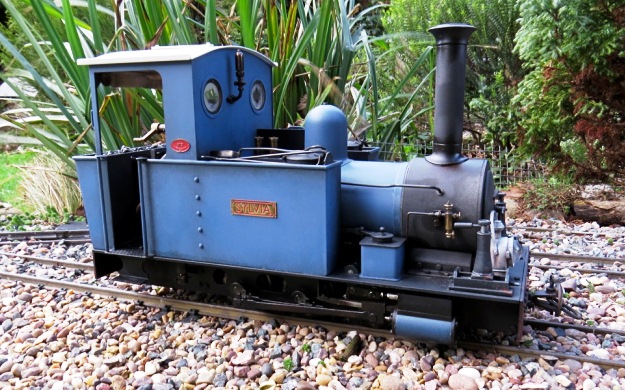
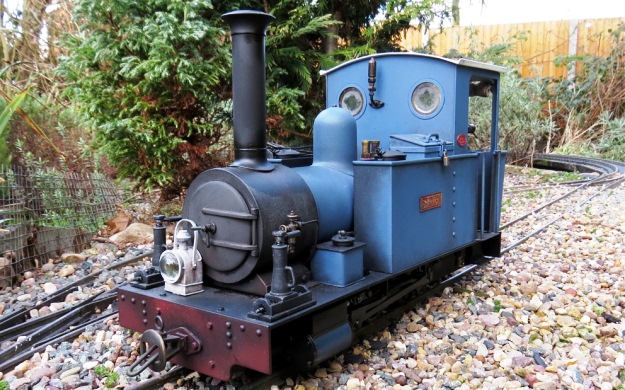
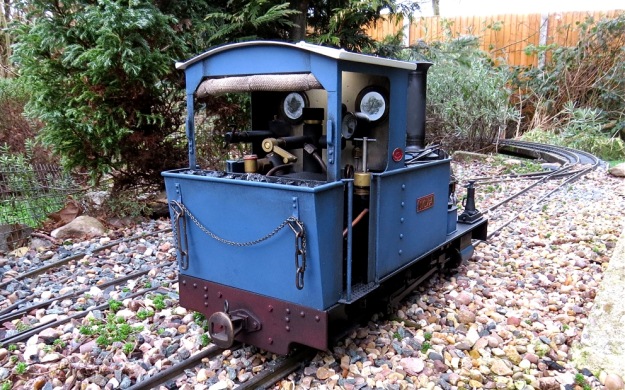
Steph’ Hicking’s loco won this year’s Accucraft Power Unit Competition. ‘Sylvia’ is built to 7/8ths scale and is the first go I have ever had at building and painting a live steam locomotive (I admit had once dropped a ready made body kit onto a RTR Edrig chassis and whipped over it with a spray can before but that doesn’t count to me). I had had a Simply 7/8ths body kit designed for the Edrig chassis in store for a long while but really I just wanted something different to the stock loco’s other people had. I also wanted to portray something bigger than those 0-4-0’s that had gone before. I selected eventually to use the Lawley 0-6-0 chassis as a base for the locomotive to give the extra heft. This of course meant that the body kit would not fit the chassis at all without a fair bit of modification so that gave me the different look I wanted. Having never put metal bodywork this big together before it felt like quite a challenge. I had spent some time drawing out ideas for the designs I liked, and I had an image in my head of what I wanted to see running around my line. In the design process I discovered the Barclay “Doll”, based at Leighton Buzzard which rather took my fancy, and I rather liked a rear coal bunker to start with, so that was task number one. In the end I built the bunker up from brass sheet and then continued on to change the body kit in several other ways including building a tool box in place of the original coal space on the side tank…. I just love the little padlock on the tool box that came from Talisman castings who also supplied loads of other details including the tank top fillers, lubricators and lamp. The end beams had new couplings and rivet detail added, the sand boxes were reconstructed differently and rivets and trims were added to the tanks and cab. I could have added many more rivets but I decided not to as I wanted to maintain a “clean” look. Swift Sixteen spectacle glasses were a final addition and I weathered the glass in these with a matt varnish and then wiped the centres clean to give the impression of a quick rub with a rag! Final detailing etc included scratch building the fire iron set from brass off cuts. All brass work that was to stay in the metal rather than being painted is dunked in brass blackener and then polished back to give it the aged look, this included the Narrow Planet nameplates too. The coal in the bunker is removable to get at the burner and body fixing screws.
Using the body kit helped take the edge of the daunting task of starting from scratch, but having to cut and bend and solder brass for the additions, (not to mention the rather scary bit of cutting up parts of an expensive kit) allowed me to gain confidence as I went along.
The whole thing actually went together like a dream and fitted really neatly on the Lawley chassis, which was a relief! Next up came the painting for which I tried a method I had not seen used before in that I painted it the way I would go about painting a piece of artwork rather than the usual spraying flat colour. I wanted the loco to look well maintained but slightly “down at heel”. I used a lot of sponges in the paint job to blend many shades of blue together to give the paint a deepness, so there actually is not one shade making up the overall colour but many! I also “pre-shaded” before adding the final coats as you would with an airbrush. I just love the effect of age and dirt on paint and tried very hard to get the red on the buffer beams to look right in my eyes as worn and dirty. Again these are not one shade of red but a whole bunch blended then weathered. Overall I wanted something completely different to the many glossy shiny locos I see so to finish the whole thing was given a coat of satin varnish and what resulted fitted the image I had in my minds eye when I started it.
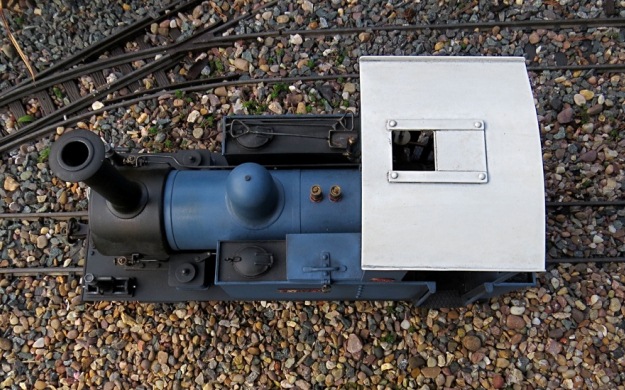
One thing to note is if you intend to take pictures of your nicely weathered white but subtly sooty toned roof is that I found it almost impossible to get the detail to expose right!
She is manual control as I love to really drive my loco’s “hands on” and runs very sweetly, and has done from the first time she moved a wheel. She has now taken on the slightly used, oily patina of a working locomotive too. Hooked on the rear bunker are the various coupler adapters for using with various peoples stock and the ubiquitous piece of chain. Looking at the pictures I now think I’ll weather the brass cab fittings…. These loco’s are never finished are they really!
Finally, why Sylvia? Well I started the construction just as my Mother in Law, Sylvia, passed away and oddly just as the loco was finished and ready for naming in her honour, in my other hobby of birdwatching I saw an extremely rare warbler species in the UK of the genus Sylvia! So it felt just right.